
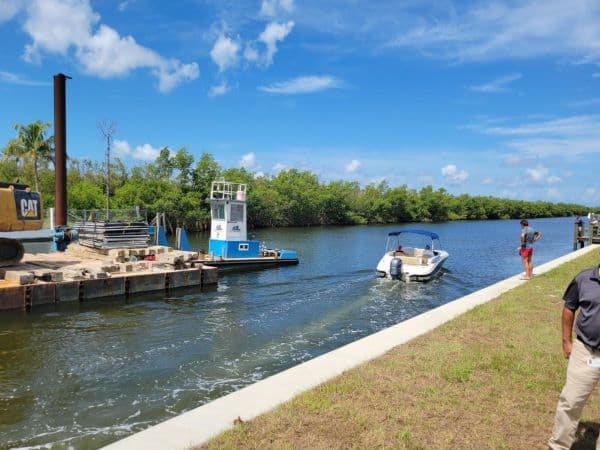
After years of discussion and months of construction, the Chiquita Boat Lock in Cape Coral has officially been removed as of June 17, 2025, ahead of schedule. This milestone marks a major improvement in boating access, safety, and environmental restoration for Southwest Florida residents. Here’s what happened, what’s next, and why this matters to our boating community.
Why the Chiquita Lock Was Removed
Originally built in the 1980s to help regulate water quality in Cape Coral’s canal system, the Chiquita Lock had increasingly become a source of frustration for boaters. It caused delays, raised safety concerns, and limited direct access to the Gulf.
The City of Cape Coral, through the South Spreader Waterway Enhancement Project, prioritized removing the lock to improve water quality, reduce nitrogen runoff into Matlacha Pass, and eliminate potential manatee entrapment. The project also aims to enhance emergency response times and overall marine safety.
Timeline of Removal: Construction Highlights
- April 1, 2025: The navigable waterway at the lock was officially closed for work to begin.
- April–June 2025: Excavation, seawall removal, sediment controls, and dredging took place in phases. Crews installed turbidity barriers, removed fill and rock, and monitored elevation levels.
- June 17, 2025: All dredging equipment and turbidity barriers were removed, marking completion of the project ahead of schedule.
Boaters are advised to proceed with caution in the area, as some shallow zones may remain. The city is pursuing city-wide dredging permits to further improve navigability.
Source: City of Cape Coral official updates — https://www.capecoral.gov/department/parks_and_recreationhome/chiquita_lock.php
What’s Next for the South Spreader Canal
The lock’s removal is just one part of a broader environmental restoration plan. Upcoming initiatives include:
- Conducting a bathymetric survey to assess depth and sediment levels
- Planting over 3,000 mangrove seedlings along the canal
- Installing oyster reef balls to boost the aquatic habitat
- Continuing water quality monitoring around the South Spreader
- Launching educational and safety programs as part of the WaterWays Science Festival
- Supporting endangered species and fisheries research
These efforts align with Cape Coral’s Environmental Improvement and Sustainability Program, which seeks to protect marine life, reduce nutrient pollution, and enhance the overall boating experience.
Why This Matters to Fish Tale Boats Customers
This is a big win for Cape Coral’s boating community. With the Chiquita Lock gone, boaters now benefit from:
- Unrestricted, faster access to the Gulf
- Improved water flow and reduced nitrogen pollution
- Safer navigation for vessels and wildlife
- Reduced wait times during peak boating hours
Fish Tale Boats supports these improvements and encourages boaters to take advantage of the more open waterways while staying informed on ongoing restoration projects.